

Projects
A Project is a backend ontology—the semantic structure of your data. It defines what entities exist, how they relate, and how they map to your Sources.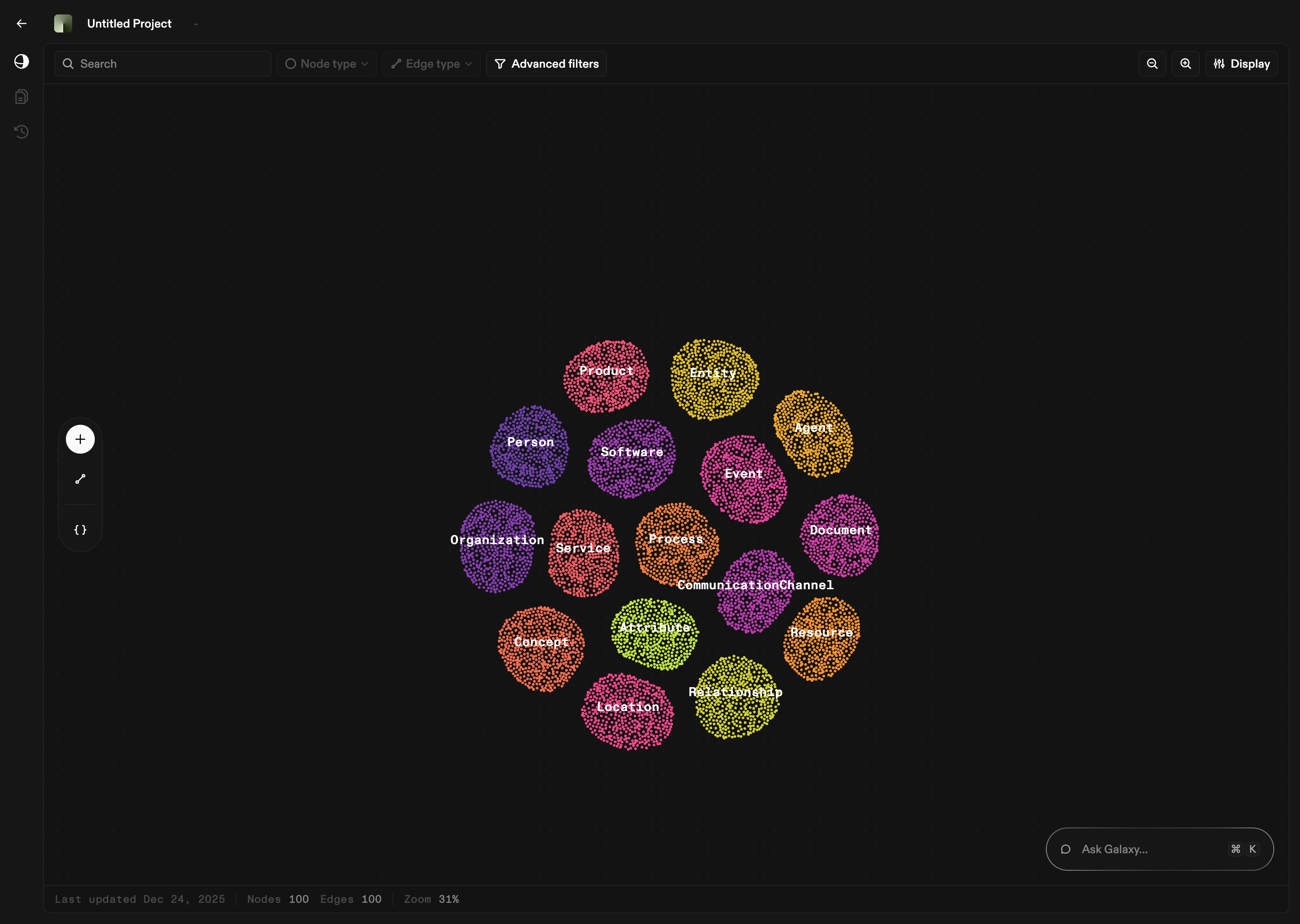
What Projects Are
Projects are semantic models that sit on top of Sources. While Sources observe what exists (tables, columns, files), Projects define what things mean and how they relate. A Project contains:- Entities: Semantic concepts like “Customer,” “Order,” or “Product”
- Relationships: How entities connect, like “Customer places Order”
- Mappings: Connections between semantic entities and Source data (e.g., mapping “Customer” to specific tables and columns)
How Projects Work
- Attach Sources: Connect one or more Sources to your Project to access their structure
- Define entities: Create entities that represent important concepts in your organization
- Map to Sources: Map entities to specific tables, columns, or other elements in your Sources
- Define relationships: Create relationships between entities to build the semantic graph
- Visualize: Explore the graph to see how entities and relationships connect
Creating a Project
- Select Sources: Choose which Sources to attach to your Project
- Choose mapping method:
- Auto-introspect: Galaxy analyzes your Sources and automatically generates initial models
- JSON: Define your ontology structure using JSON
- Blank: Build from scratch with a canvas experience
- Run ontology pipeline: Galaxy processes your Sources and generates the initial semantic graph
Project Artifacts
Projects generate artifacts during ontology pipeline execution. Artifacts represent different aspects of your semantic model:- Discovery Report: Documents what was found in your Sources
- SKOS Model: Semantic models in SKOS format
- Galaxy Manifest: SQL manifests representing the semantic model
- Validation Report: Validates consistency and correctness
Sources and Projects
Galaxy separates observation from interpretation:- Sources observe reality: They record what exists without opinion
- Projects interpret reality: They define what structures mean in context