

The Problem Galaxy Solves
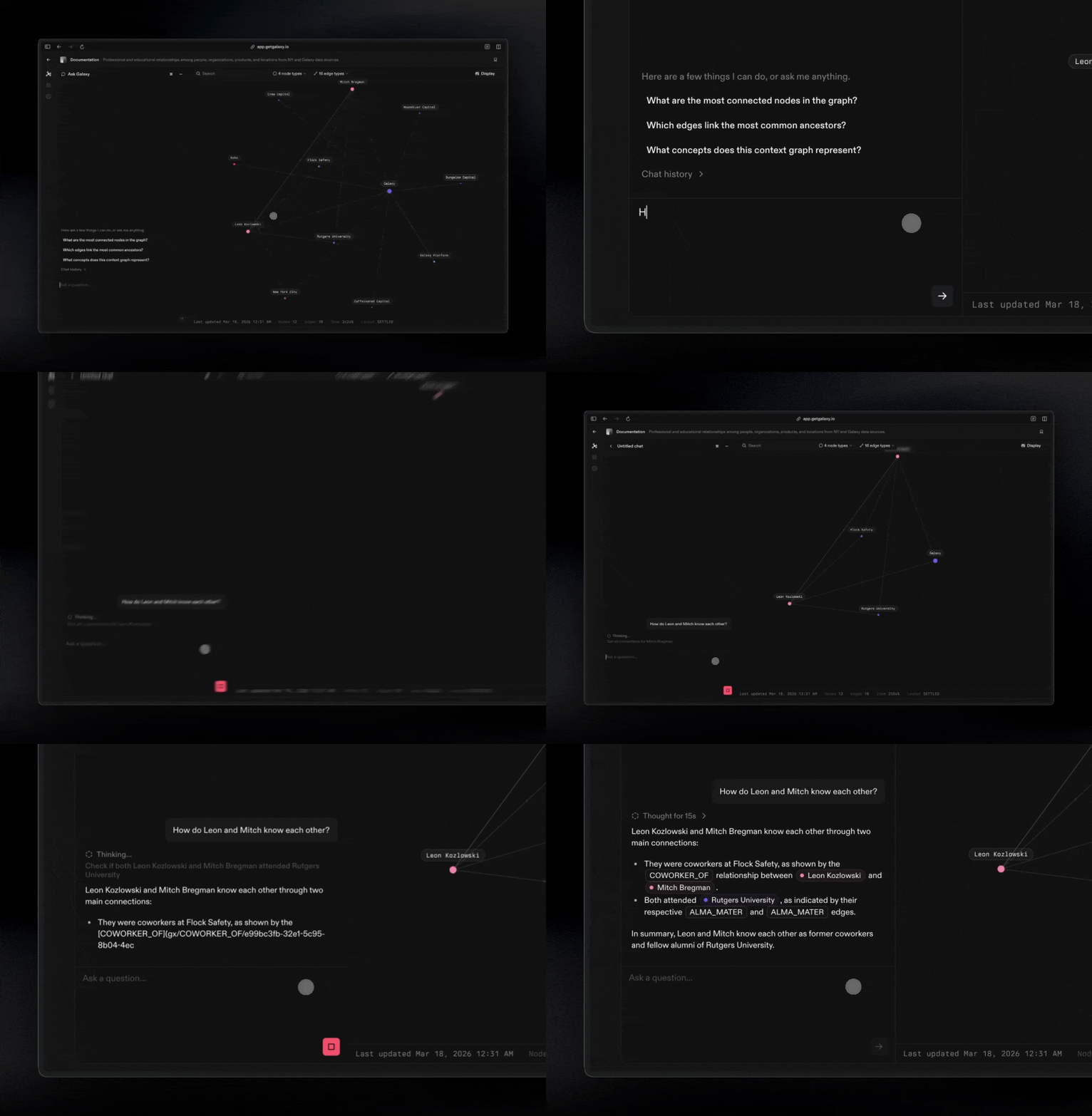
Every growing organization eventually hits the same wall:Data is everywhere, but understanding is nowhere.Over the last decade, companies invested heavily in data warehouses, ETL tools, BI dashboards, metrics layers, reverse ETL, and AI. This abundance of data and tooling produced fragmentation as each system held its own partial truth, forcing teams to spend time reconciling definitions, resolving discrepancies, and translating business logic instead of building insights. Maintaining this stack is expensive. Specialized teams are responsible for keeping pipelines running, transforming raw data into usable tables, and answering an endless stream of ad hoc questions. Analytics engineers are constantly cleaning and reshaping data to keep up with changing business needs. The result is often a metric delivered in isolation, without the broader context that explains how it was defined, how it relates to other concepts, or whether another team defines it differently. At the same time, AI is becoming more and more central to all of our stacks. Agents can query warehouses and search documentation, but they cannot reliably interpret how the business actually works. Critical knowledge lives across dashboards, transformation logic, spreadsheets, and key people, causing definitions to drift and meaning to become fragmented. Galaxy solves this by providing a context layer that replaces data silos with a shared source of truth.
What Galaxy Is (and Isn’t)
Galaxy is:
- The semantic foundation your stack is missing
- A context graph of your core entities and relationships
- A bridge between technical systems and business logic
- Infrastructure for consistent analytics, AI reasoning, governance, and collaboration
Galaxy is not:
- A BI dashboard tool
- A replacement for your data warehouse or analytics engine
- Just a data catalog